01
Direction & interviews
- three subject-matter experts
- on location
Project overview
BC Cancer works at the leading edge of cancer research, reading tumours at the level of a single cell's DNA. The science is extraordinary and genuinely hard to picture: sequencing the genomes of thousands of individual cancer cells, then using machine learning to understand why some cells survive treatment when others don't. My job was to translate that: to make a general audience feel the significance of work happening at the scale of three billion letters of DNA per cell.
Produced in partnership with Microsoft, the film also had to show how cloud computing removed the bottleneck that had been holding the research back, without tipping into a technology ad. The scientists, and the patients behind the science, had to stay at the centre. And it had to work across audiences and formats: a launch-event feature, a social cut-down, and an executive summary, from one shoot.
Screens and stills from the project.
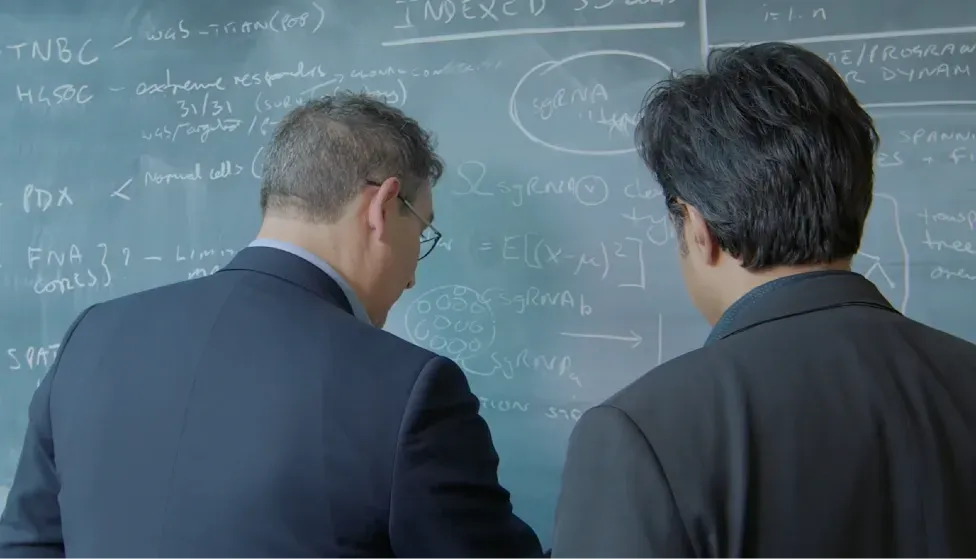
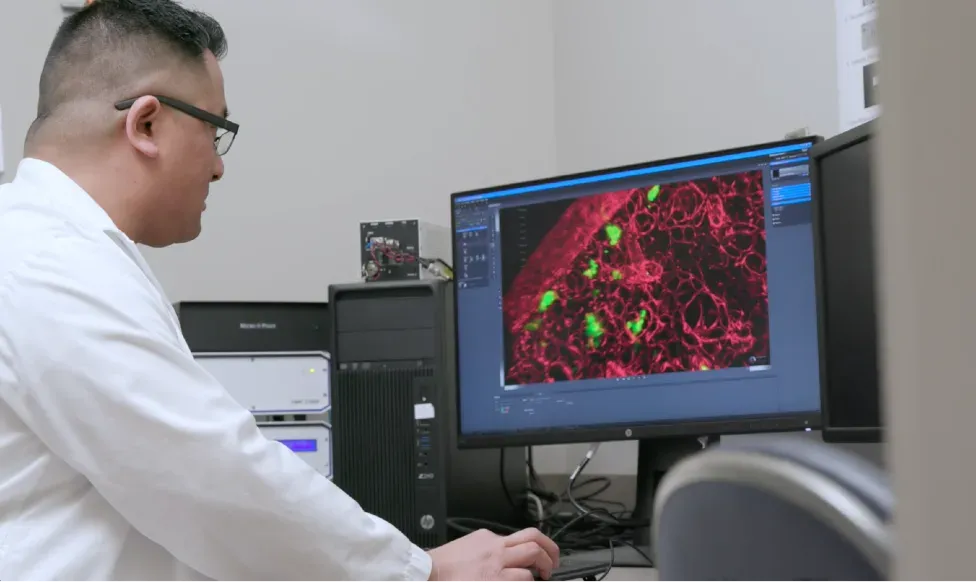
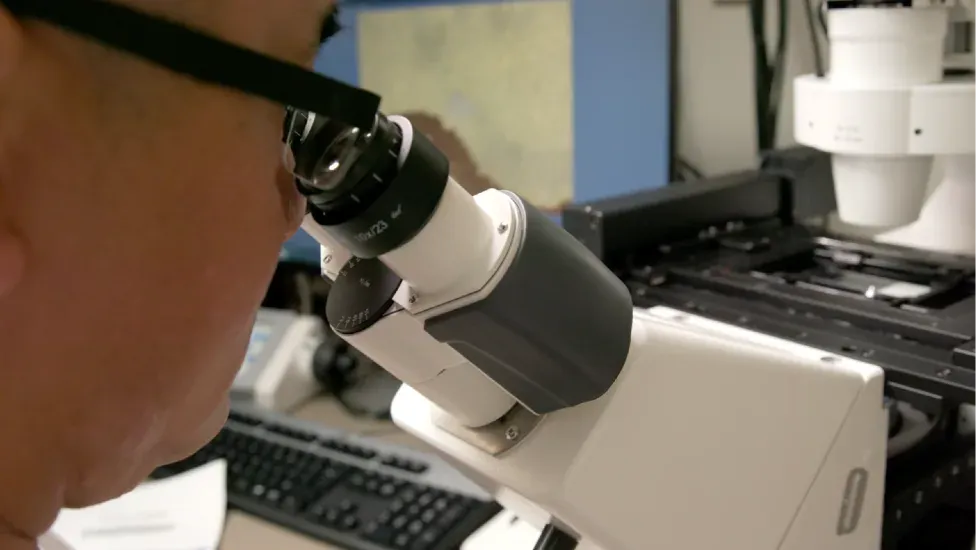
Shots from the room where it happened.
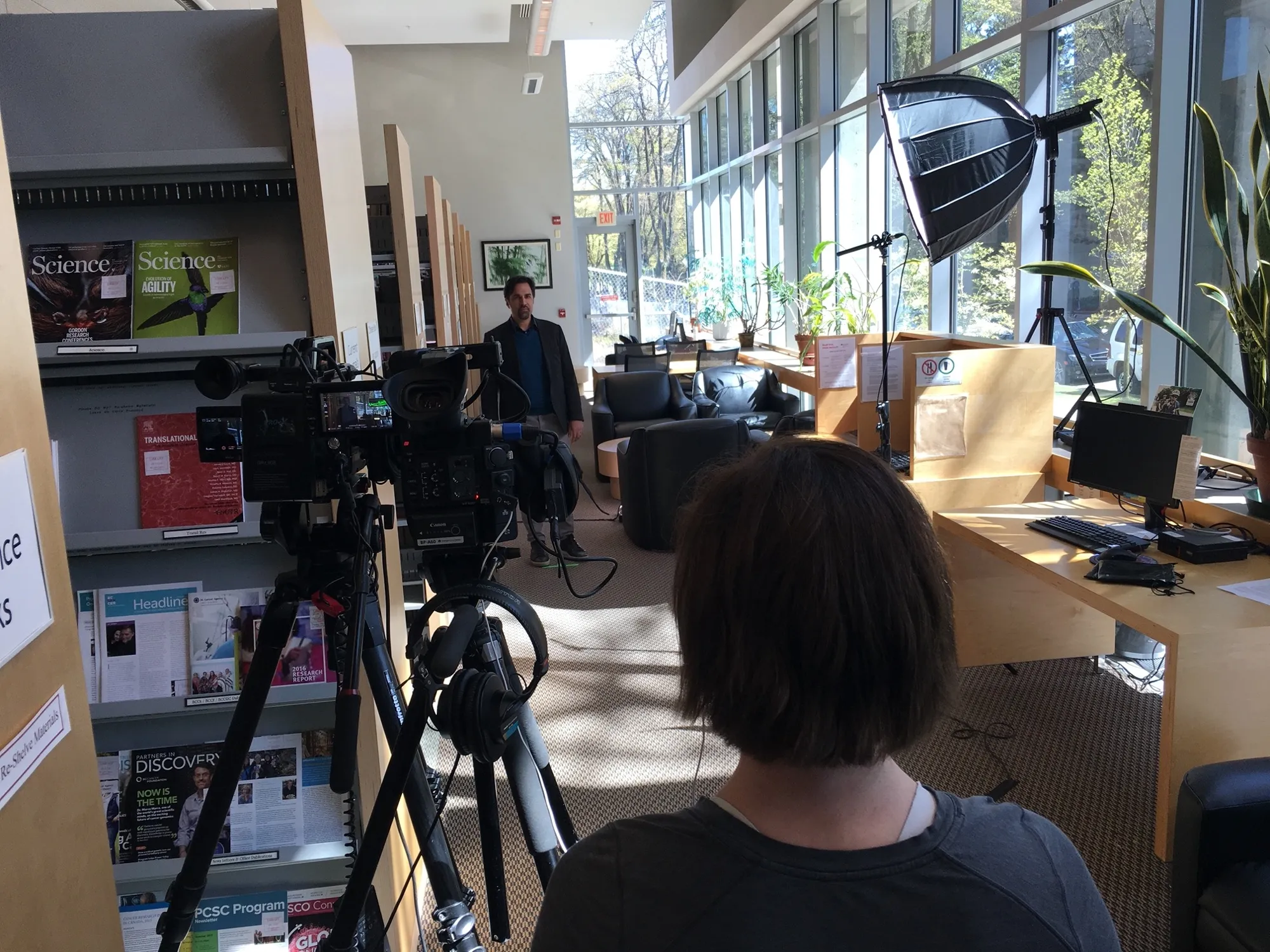
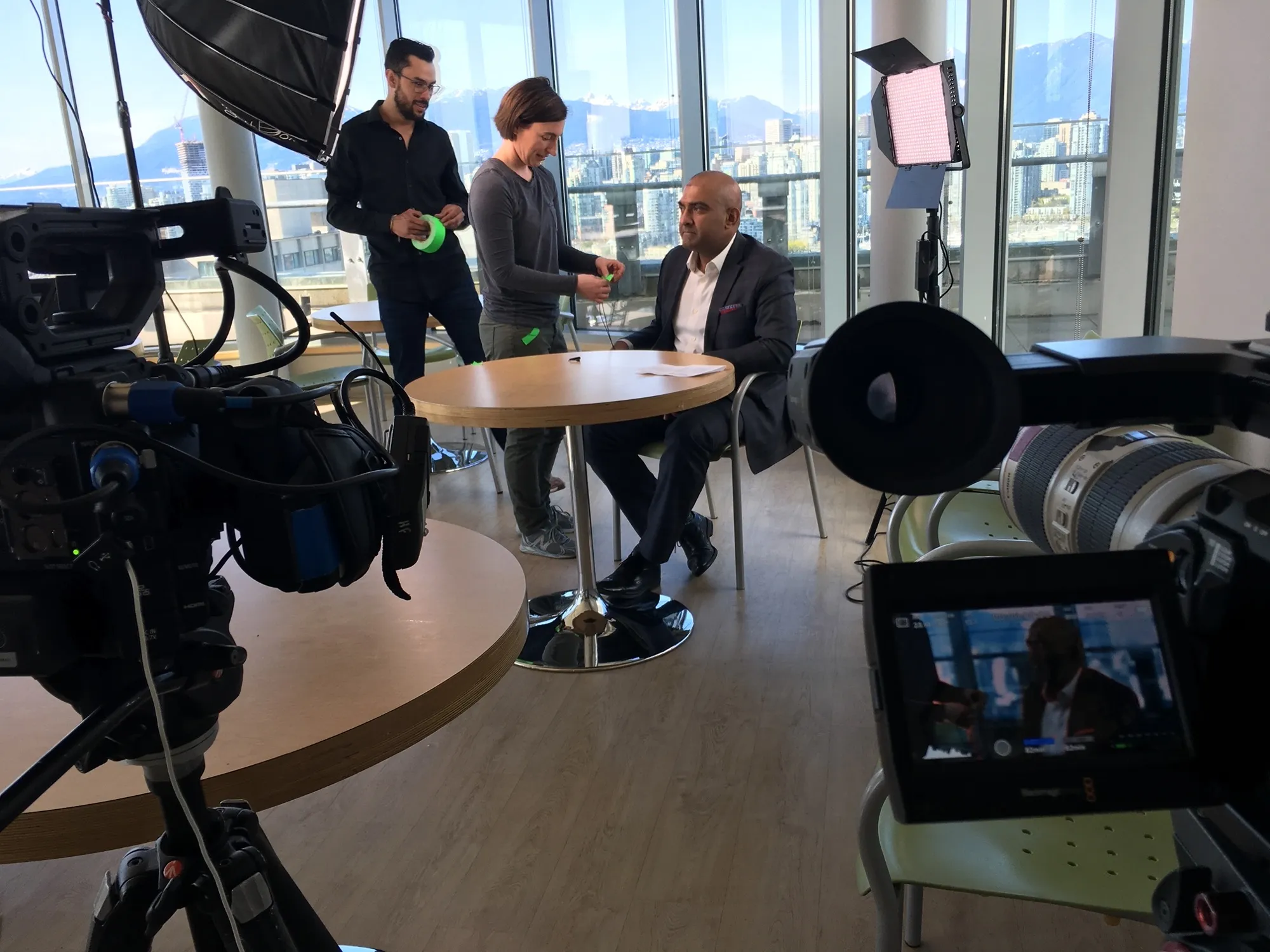
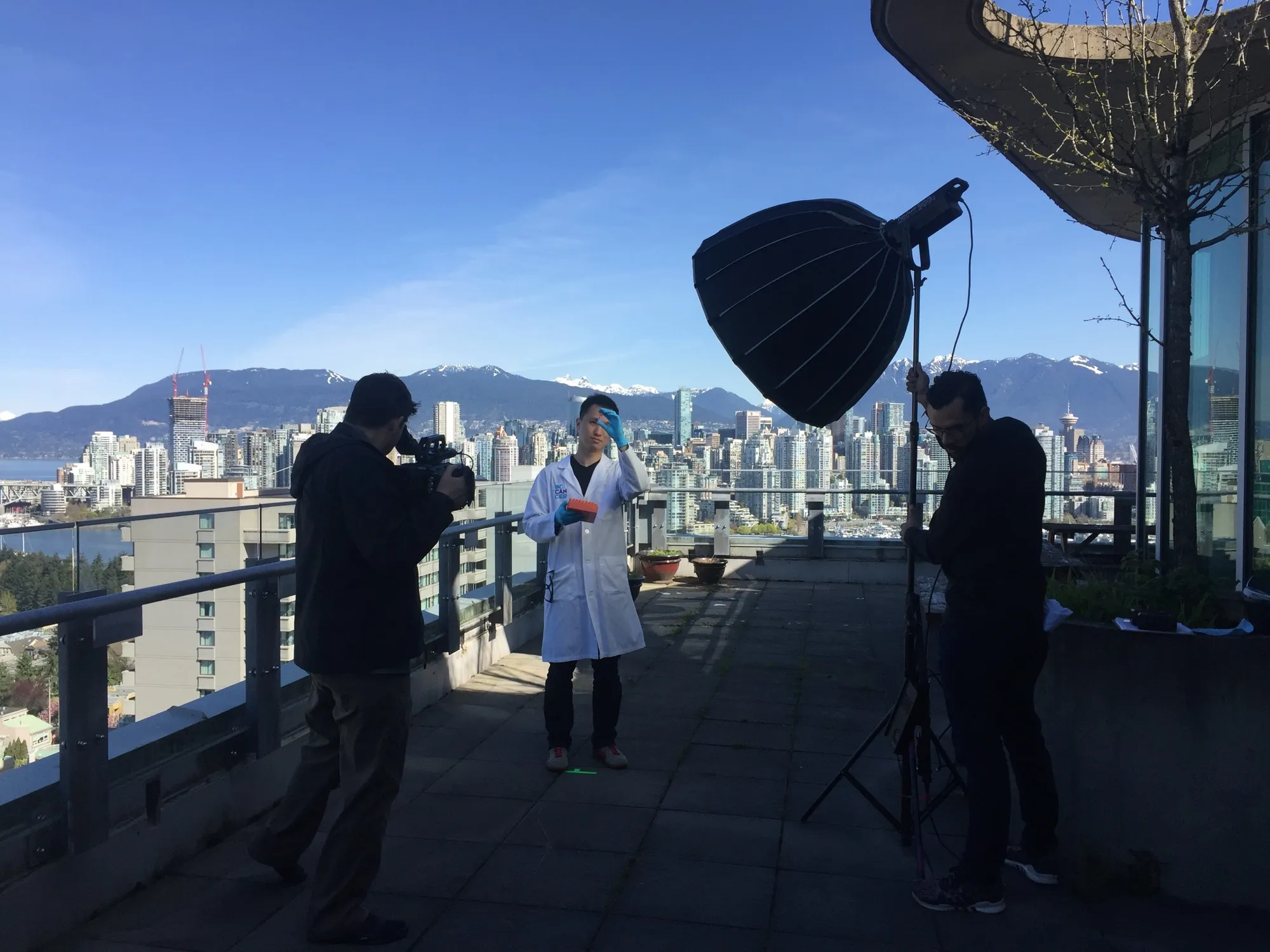
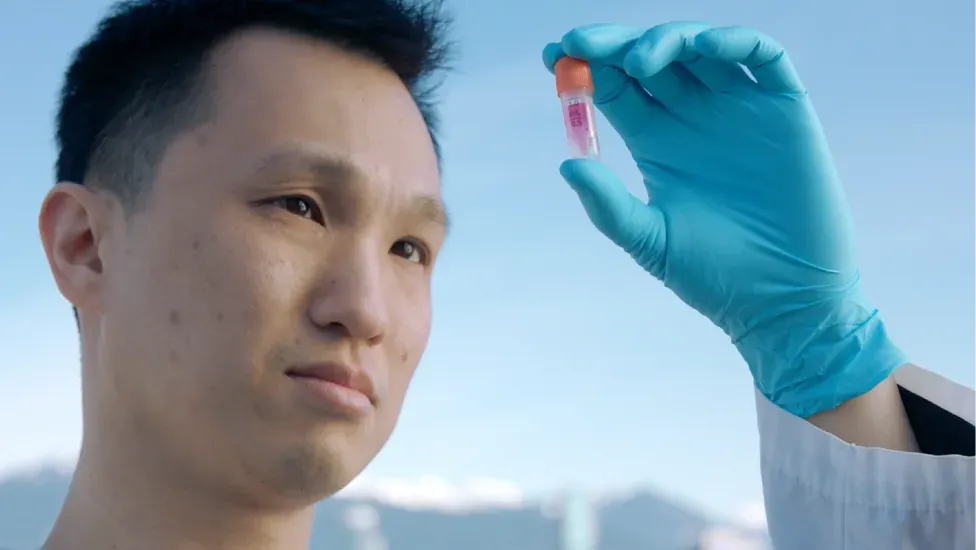
I led the creative development and directed the shoot on location at BC Cancer in Vancouver, from the research library and lab benches to a rooftop above the city and the mountains. I planned each interview, set the lighting, captured the audio, and shot the B-roll: single-cell samples in gloved hands, fluorescence microscopy at the monitor, the whiteboard math where the new science actually gets worked out.
The story is built around Dr. Sohrab Shah's own metaphor: that sequencing individual cancer cells is like looking down a microscope for the first time, or launching the Hubble Space Telescope and seeing galaxies. That single image carries the whole piece; it turns an abstract leap in genomics into a moment of discovery anyone can feel.
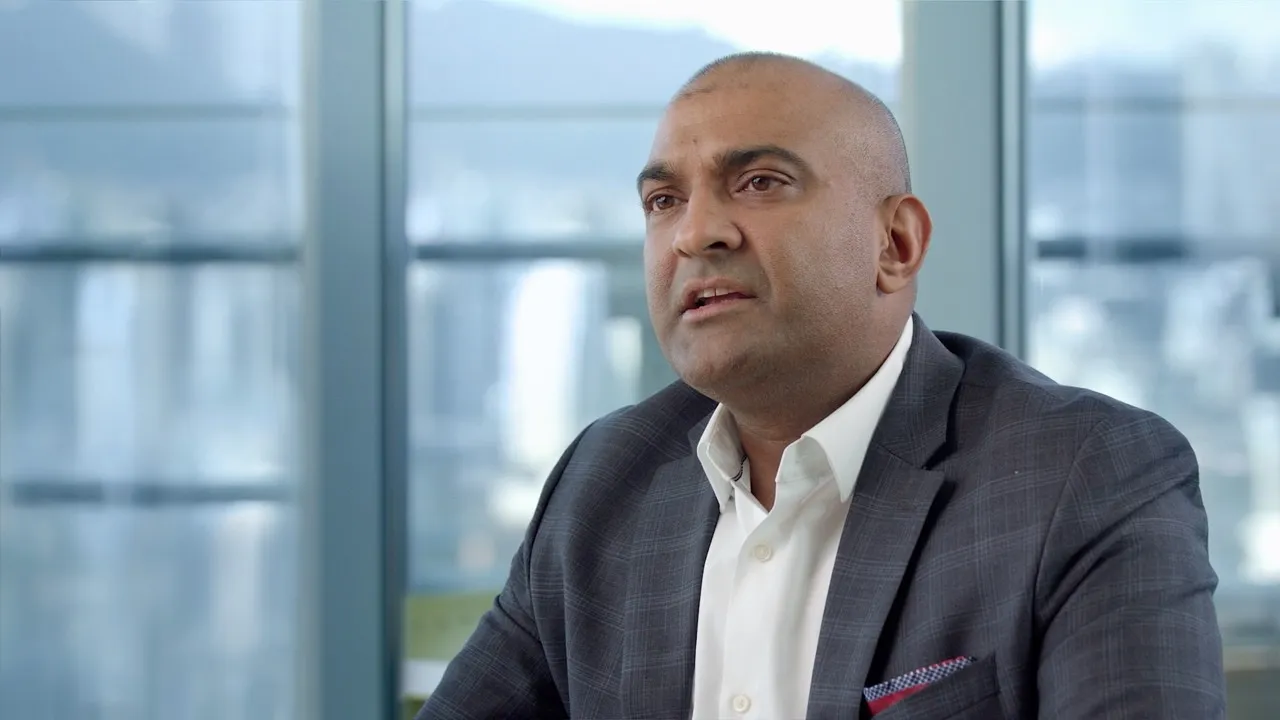
I interviewed the lead scientist (Dr. Sohrab Shah), a research-team developer (Andrew McPherson), and Microsoft's Raj Cheema, then cut the footage into a suite of deliverables for the launch: a two-to-three-minute feature film, a 30-second social cut-down, and an executive summary. Alongside the video I produced the on-location stills and wrote the social campaign that carried the story across channels. The posts below are paired to the cut-down and the picked quotes.
BC Cancer sits at the leading edge of cancer research, sequencing single cancer cells and using high-performance computing, machine learning and artificial intelligence to understand cancer at the most fundamental level of DNA. Dr. Sohrab Shah: What this is giving us is an unprecedented look into a tumour. It's like being able to look down the microscope for the first time, or launching the Hubble Space Telescope and being able to see galaxies for the first time. We can see the genomes of individual cells, and that allows us to really understand the diversity that exists within a cancer, and ultimately to learn the process by which these tumours acquire resistance to treatment. Raj Cheema, Microsoft Canada: We're looking at the transformation of research and how it's done, and quite possibly the application of that research into clinical medicine. Dr. Sohrab Shah: Our project simply would not be possible without the Microsoft partnership. The cloud computing infrastructure, Microsoft Azure's platform, has allowed us to make progress at a rate we wouldn't have been able to otherwise, and it's been an essential component of our research.
Sample social posts I wrote to run alongside the 30-second cut-down and the campaign’s picked quotes, native to each platform and built from the same day on location.

bccancer.research
Vancouver, BC
SINGLE-CELL GENOMICS
Reading cancer, one cell at a time.
1,284 likes
bccancer.research Every breakthrough starts on a chalkboard. BC Cancer’s researchers are mapping the math behind a fundamentally new way to read a tumour, cell by cell, three billion letters of DNA at a time.
#CancerResearch #SingleCellGenomics #PrecisionMedicine #BCCancer
View all 47 comments · 2 HOURS AGO
bccancer.research
Vancouver, BC
AT SINGLE-CELL RESOLUTION
This is a tumour, up close.
912 likes
bccancer.research Thousands of individual cells, each imaged and sequenced. “The unit of function is the single cell; to understand the whole system, we have to study the cells one at a time.” — Dr. Sohrab Shah
#Genomics #CancerResearch #MachineLearning #BCCancer
View all 31 comments · 1 DAY AGO
bccancer.research
Vancouver, BC
IT STARTS WITH ONE SAMPLE
The Hubble Telescope of cancer research.
2,047 likes
bccancer.research It all begins here, with a single sample. What comes next is what Dr. Sohrab Shah calls “launching the Hubble Space Telescope and seeing galaxies for the first time”: sequencing, machine learning, and a view into a tumour no one has ever had.
#PrecisionMedicine #CancerResearch #CloudForGood #BCCancer
View all 86 comments · 3 DAYS AGO
bccancer.research
Vancouver, BC
OLD TOOLS, NEW SCIENCE
400 terabytes and counting.
768 likes
bccancer.research Before the cloud, before the code: the microscope. Old tools and new, pointed at one question: why do some cancers stop responding to treatment? With Microsoft Azure, analysis that took weeks now runs overnight.
#CancerResearch #HPC #SingleCell #BCCancer
View all 22 comments · 5 DAYS AGO
Paired video post
The same story, written long for LinkedIn and cut to 30 seconds for the feed. One day on location becomes a feature film, a social cut-down, an executive summary, and a run of posts, each shaped for where it lands.

BC Cancer
Provincial Health Services Authority · 41,204 followers
Launch campaign ·
What if you could see a tumour the way astronomers first saw galaxies?
At BC Cancer, the research team is sequencing the genomes of individual cancer cells: thousands per tumour, three billion letters of DNA each. The science was never the bottleneck. Compute was.
With Microsoft Azure, analysis that once took weeks now runs overnight, and BC Cancer is publishing one of the largest single-cell cancer datasets in the world, so researchers everywhere can build on it.
We filmed this story on location in Vancouver, from the lab bench to the rooftop. Here’s the 30-second cut.
#CancerResearch #SingleCellGenomics #PrecisionMedicine #CloudComputing
Before a frame is shot, the film is written on paper. This is the working brief for the BC Cancer piece: the thinking that turned a dense research story into a plan.
BC Cancer works across three workloads: collecting single-cell samples, sequencing them into data, and running high-performance computing with machine learning to understand cancer at the level of DNA. They had optimized the first two but hit a wall on the third, and an on-prem hardware failure had already cost them data they couldn’t afford to lose again. Microsoft Azure removed the compute bottleneck and added elasticity, disaster recovery, and a platform for collaboration, including publishing their single-cell datasets for researchers worldwide.
Make the invisible visible. Cancer read one cell at a time is abstract, so the film borrows the lead researcher’s own metaphor: sequencing individual cancer cells is like looking down a microscope for the first time, or launching the Hubble Space Telescope and seeing galaxies. Discovery is the throughline; the cloud is what makes the new telescope possible.
Beginning: the question that has always limited cancer treatment. Why do some cells survive? Middle: a fundamentally new way to see, cell by cell, and the wall the team hit trying to compute it. Turn: the cloud removes the wall; weeks become overnight; the data becomes shareable with the world. End: what this makes possible, from precision medicine to a dataset that accelerates everyone’s research.
Filmed: interviews with the lead researcher, a research-team developer, and Microsoft’s public-sector lead; B-roll of single-cell samples and vials, fluorescence microscopy, pathology at the microscope, and the whiteboard where the math gets worked out. Locations: research library, labs, and a rooftop above Vancouver, using the mountains and skyline as the film’s sense of place. Kit: Blackmagic Ursa, Canon C200, Møvi gimbal, and a Canon 5D for the timelapses; interview lighting and lav audio.